The serpent: a bass instrument with a winding body
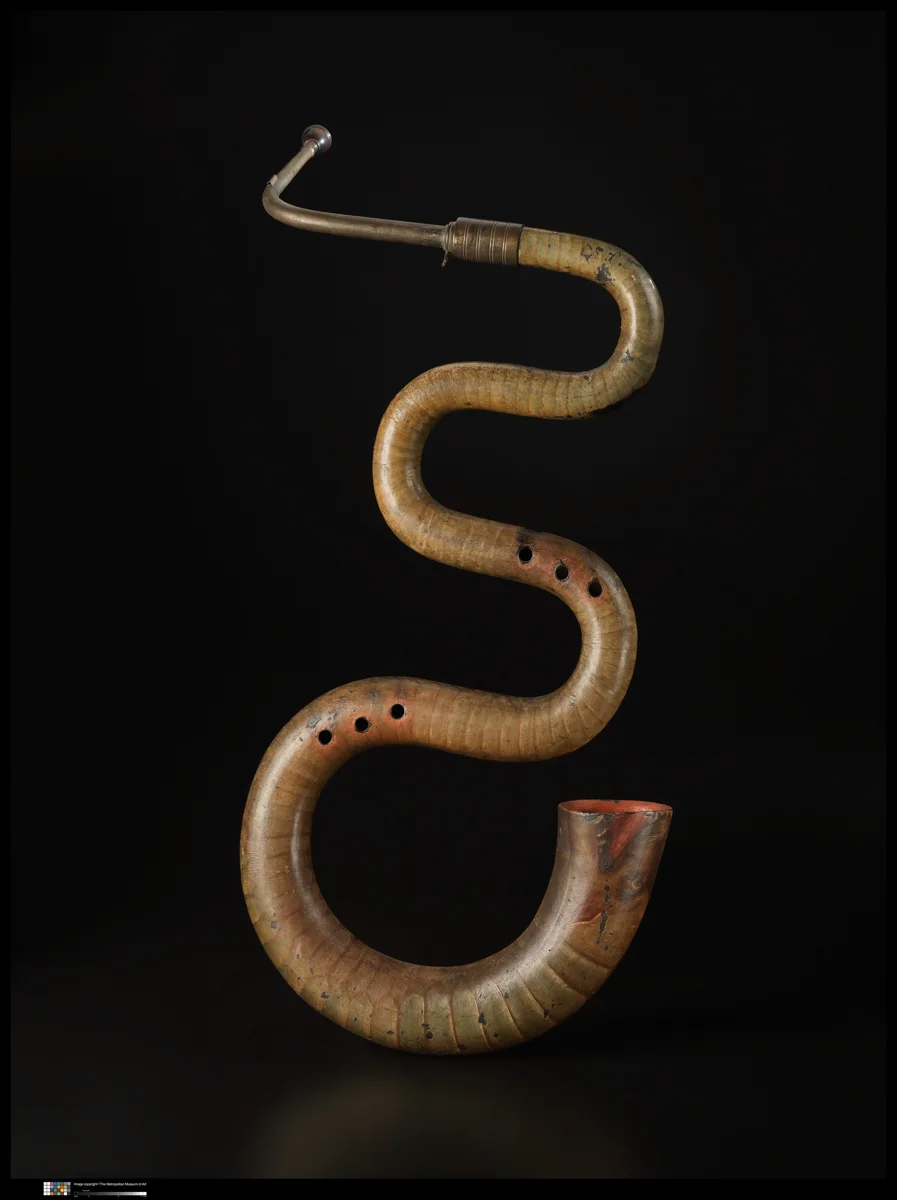
Serpent / ca. 1820
With all those bends, where do your fingers go?
So, what is it?
A wind instrument that provided bass support in church music and other settings.
A closer look
A long tube curves from side to side, with a series of holes along it for the player to cover with their fingers. This is a serpent: a wind instrument with a snakelike shape that takes the bass part.
C. Baudouin made this example in Paris around 1820. The museum explains that the bends in the tube make the holes easier for the player's fingers to reach. Wear around the finger holes also preserves traces of playing.
Serpents have supported singing in church music and other settings. How do you fit a long tube to a pair of human hands? These curves offer one answer.
Read the curves from the player's side
Follow the finger holes rather than only the snake-like silhouette. The museum explains that the bends help bring the holes within reach. This makes the curve a relationship between a long tube and a player's hands, rather than simply a decorative outline. Wear around the holes draws attention to the places where instrument and player met.
A different solution from the walking-stick instrument
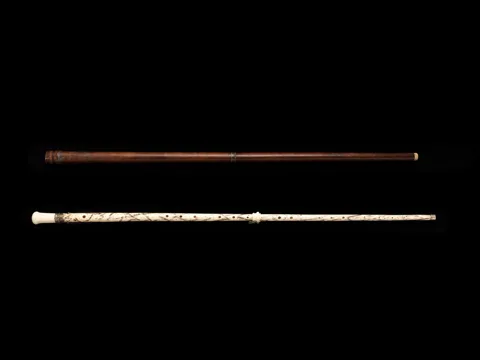
The walking-stick flute/oboe combines two ways of playing within a slender form. The serpent instead bends a long tube to bring its holes closer to the hands. Both invite us to consider the body using the instrument. A photograph cannot establish their tone or ease of playing, so this comparison concerns shape and documented operation.
Explore the comparison → Walking-Stick Flute/Oboe
The observations and comparisons above are editorial interpretation. Object facts are based on these museum records. This object · Comparison object
An editorial summary based on the museum's official records.
The tube takes the long way round, but your fingers get a shortcut.
What interests you most about the serpent?
Choose the answer that interests you most.
This voting experience is local to this device.
Choices are not shared or counted together with other people's votes.
Object Details
- Official title
- Serpent
- Date
- ca. 1820
- Place
- Paris, France
- Collection
- The Metropolitan Museum of Art
- Accession number
- 2012.568a–c
- Source
- Official collection page
Purchase, Robert Alonzo Lehman Bequest, 2012
The museum's image-use policy
Object-image rights checked: 2026-10-11