A walking stick that is both flute and oboe
Walking-Stick Flute/Oboe / ca. 1750–57
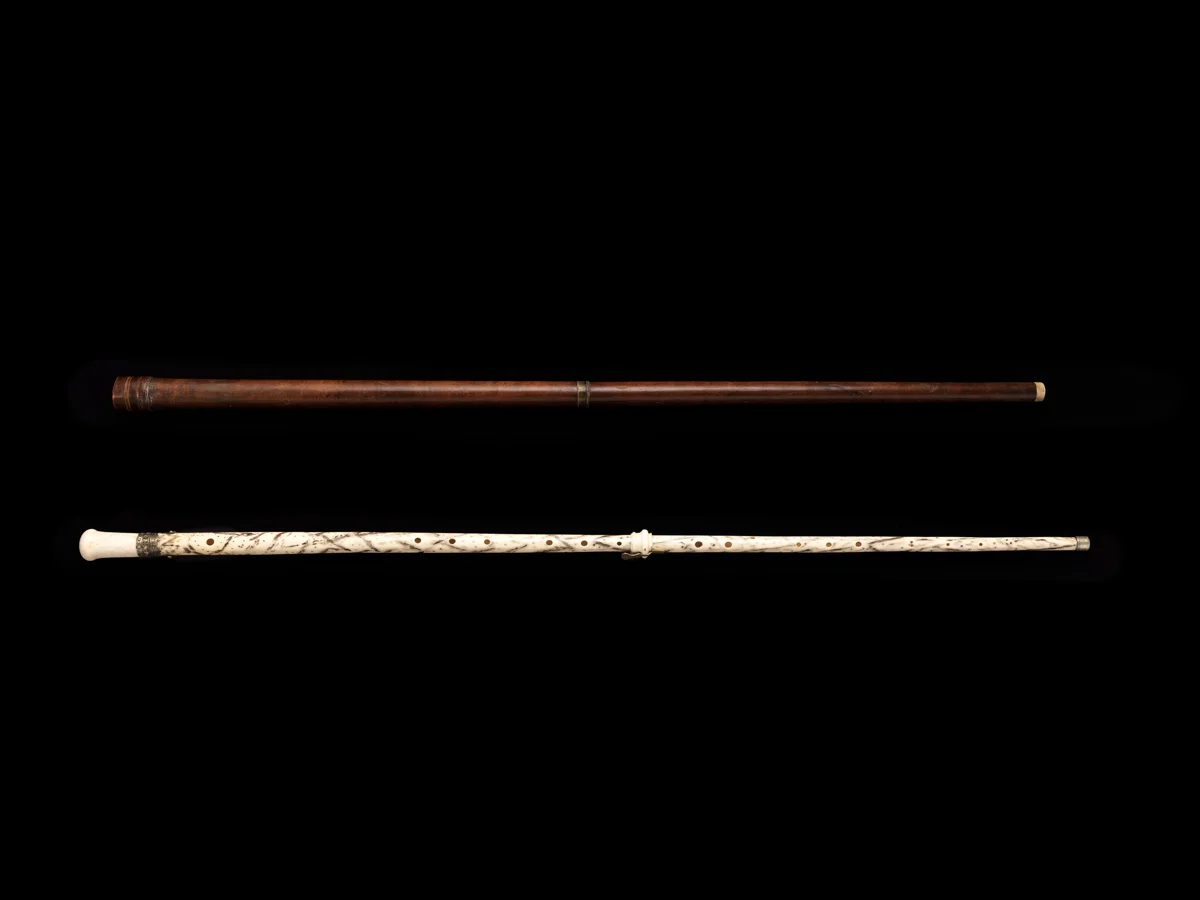
Holes along a walking stick—could it be an instrument?
So, what is it?
An instrument combining a transverse flute and an oboe in the form of a walking stick.
A closer look
Look closely at the long, pale component and you will find holes and patterns. Made by Georg Henrich Scherer in Butzbach, Germany, around 1750–57, this instrument combines a transverse flute and an oboe in the form of a walking stick.
The museum explains that the upper section forms a transverse flute and the lower section an oboe. To play it as an oboe, a double reed is inserted at the lower end and a key is repositioned. The slender outline is shared, but the way it is played can be changed.
Its materials include narwhal tusk. The story that it was a gift from a king is reported rather than established, and should not be treated as certain provenance. Nor can we identify the long component shown above it from this main image alone. We can begin with the holes and decoration that are visible.
One outline, two ways of playing
Begin by separating the transverse flute in the upper part from the oboe in the lower part, as described by the museum. The reed and key changes for oboe playing explain an operation that the overall silhouette alone cannot show. Distinguishing its walking-stick appearance from its musical construction makes the combination easier to understand.
A contrast with the serpent
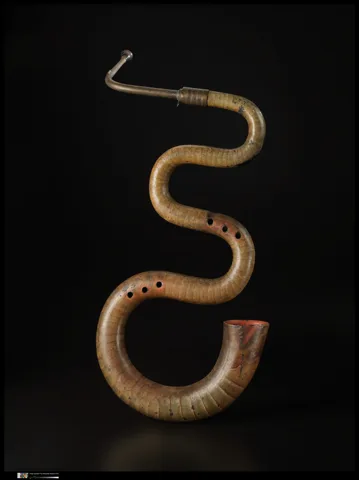
The serpent bends its tube to bring finger holes within reach. This instrument keeps a slender outline while offering two playing configurations. Both raise questions about the relationship between operation and shape. A photograph cannot settle how comfortable the parts were to handle, or whether this object was safe to lean on as a walking aid.
Explore the comparison → Serpent
The observations and comparisons above are editorial interpretation. Object facts are based on these museum records. This object · Comparison object
An editorial summary based on the museum's official records.
Before taking a walk, I'd like to hear it play.
What interests you most about this walking-stick instrument?
Choose the answer that interests you most.
This voting experience is local to this device.
Choices are not shared or counted together with other people's votes.
Object Details
- Official title
- Walking-Stick Flute/Oboe
- Date
- ca. 1750–57
- Place
- Butzbach, Germany
- Collection
- The Metropolitan Museum of Art
- Accession number
- 2006.86a–c
- Source
- Official collection page
Purchase, Amati Gifts, 2006
The museum's image-use policy
Object-image rights checked: 2026-10-11