A pomander with little compartments for scent
Pomander / 16th century
There are little compartments inside that round container?
So, what is it?
A piece of jewelry for carrying strongly scented materials.
A closer look
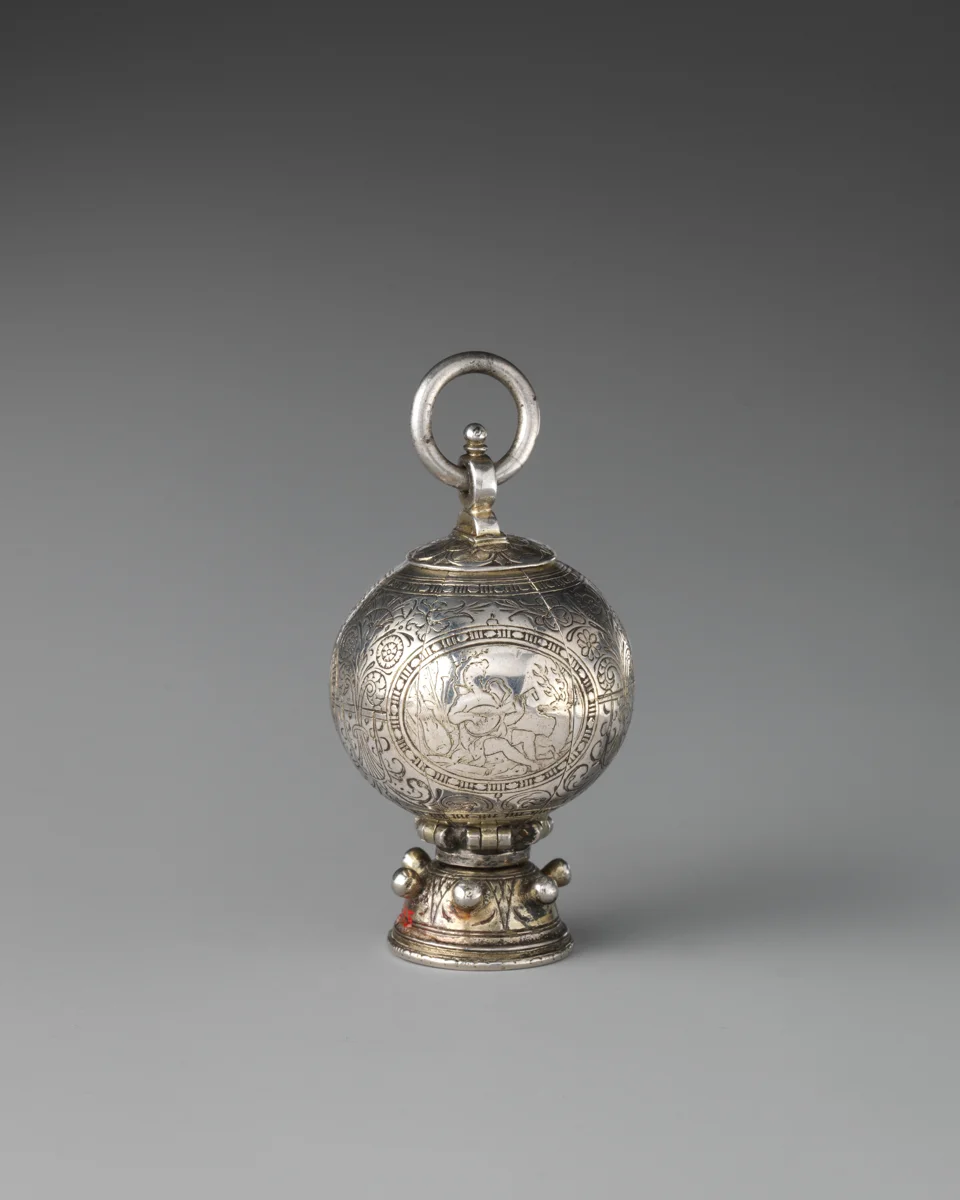
Fine patterns cover a round metal surface, with a loop at the top. This is a pomander from 16th-century Germany. Made of silver with a layer of gold, it is a piece of jewelry for carrying strongly scented materials. In this photograph of it closed, its outline and surface decoration catch the eye first.
According to the museum, the interior is divided into small hinged compartments, each with a sliding lid. The compartments are also inscribed with names identifying their contents, including cinnamon and nutmeg. Within a single round form is a structure designed to keep the scented materials separate.
The round shape we see on the outside and the compartments we learn about from the description: that difference is part of the pleasure of looking at this piece of jewelry. The interior compartments are not shown in this main image, however. Look separately at the surface patterns visible in the photograph and the storage system described in the official account.
Read the interior through the record
The photograph presents a single rounded ornament, while the museum describes several internal compartments. Names such as cinnamon and nutmeg, together with sliding covers, explain how aromatic materials could be kept separate. They do not establish whether any contents survive today or what this particular object now smells like.
Visible and described storage
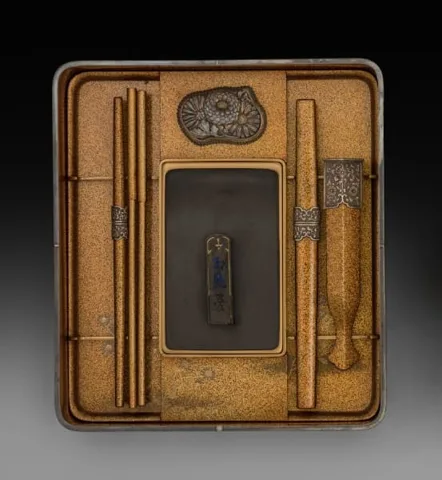
The writing-box article shows tools arranged in an open box. This pomander asks us to combine a closed exterior with a written account of its interior. Both concern organized storage, but the photograph supplies different evidence in each case. Asking how we know about the inside adds another layer to looking at the outside.
The observations and comparisons above are editorial interpretation. Object facts are based on these museum records. This object · Comparison object
An editorial summary based on the museum's official records.
You'd never spot that clever detail from the outside.
What appeals to you about the pomander?
Choose the answer that interests you most.
This voting experience is local to this device.
Choices are not shared or counted together with other people's votes.
Object Details
- Official title
- Pomander
- Date
- 16th century
- Place
- Germany
- Collection
- The Metropolitan Museum of Art
- Accession number
- 32.75.45
- Source
- Official collection page
The Collection of Giovanni P. Morosini, presented by his daughter Giulia, 1932
The museum's image-use policy
Object-image rights checked: 2026-10-11