A vessel that whistles when rocked
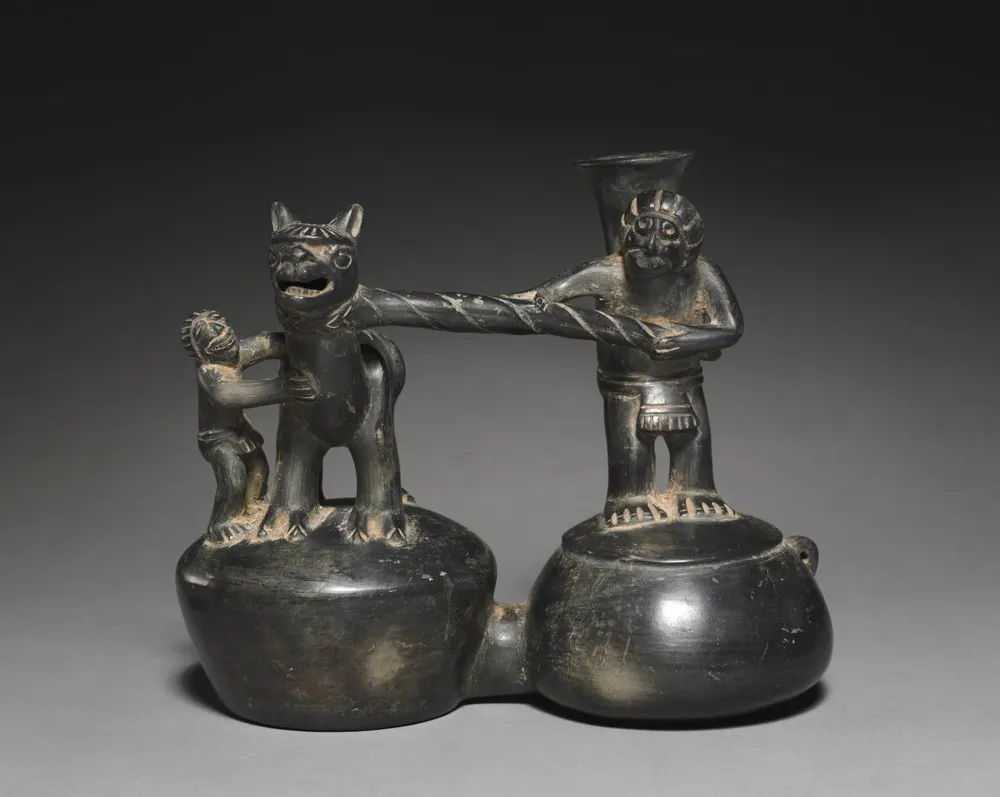
Double-chambered Vessel with Figures and Camelid / 1470–1532 (Thermoluminescence date, 1310–1610)
Am I supposed to blow into its mouth?
So, what is it?
A ceramic vessel that produces a whistle when rocked with liquid inside.
A closer look
A small figure stands behind the animal. Another stands opposite, holding a twisted bar that spans the gap. Look much lower and you can spot a second, shorter connection just above the ground.
According to the Cleveland Museum of Art, rocking the filled vessel makes a whistling sound emerge from the camelid. The action it describes is surprisingly different from playing a whistle with the lips. Here a person moves the entire pot.
The vessel stands about 20 centimetres high. The museum dates it to 1470–1532, after the Inka conquest of the Chimú. Look again at the animal’s open mouth with that sound in mind. Its expression takes on a part of the scene that the photograph cannot capture.
Find both bridges
Follow only the upper bar and you might see a person leading an animal on a rope. The join below changes the reading. These figures stand on parts of a single vessel, built to tilt together. The external connections are visible, but the photograph does not reveal the route that air or liquid follows inside.
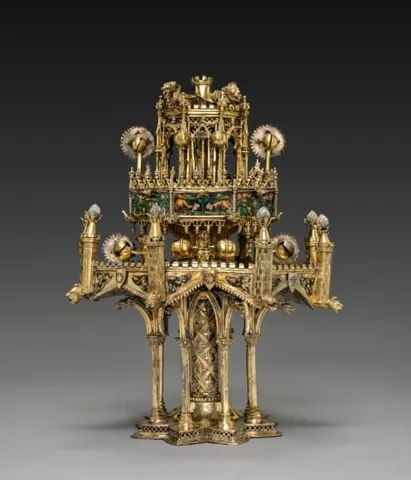
Compare a fountain that rings bells
The tabletop fountain has external wheels and little bells. You can point to places where water sets things moving. On this vessel, the hand rocks the whole object and the sound seems to belong to the animal. The two pieces make different parts of their performance visible.
Explore the comparison → Table Fountain
The observations and comparisons above are editorial interpretation. Object facts are based on these museum records. This object · Comparison object
An editorial summary based on the museum's official records.
I want a closer look at the join between those two bellies!
What draws your eye across the gap?
Choose the answer that interests you most.
This voting experience is local to this device.
Choices are not shared or counted together with other people's votes.
Object Details
- Official title
- Double-chambered Vessel with Figures and Camelid
- Date
- 1470–1532 (Thermoluminescence date, 1310–1610)
- Place
- Andes, Chimú-Inka
- Collection
- The Cleveland Museum of Art
- Accession number
- 2011.112
- Source
- Official collection page
Norman O. Stone and Ella A. Stone Memorial Fund
The museum's image-use policy
Object-image rights checked: 2026-11-22