A lion-shaped vessel for washing hands
Aquamanile in the Form of a Lion / ca. 1400
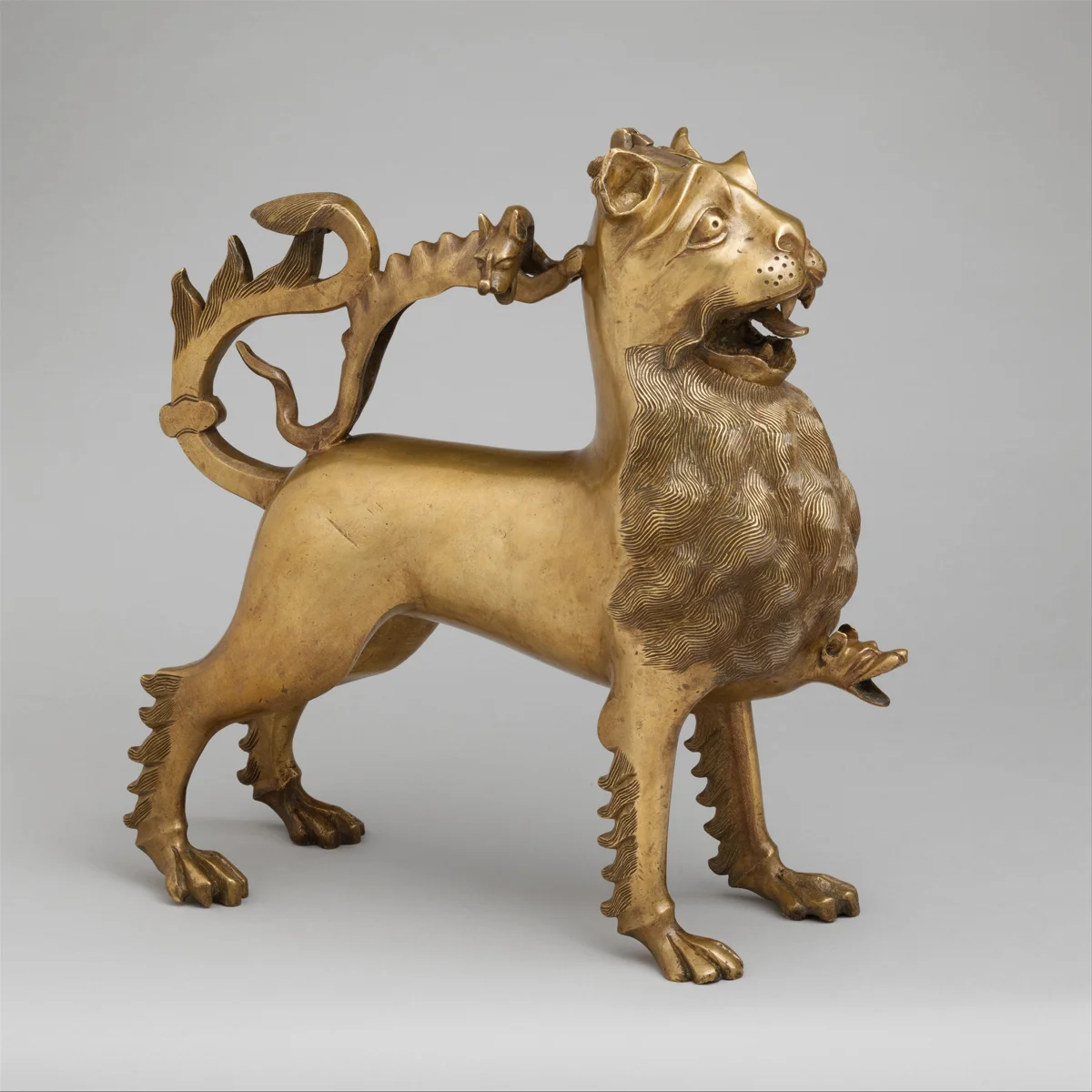
A loop on its back and an open mouth—how does it work?
So, what is it?
A vessel for pouring water to wash hands.
A closer look
A lion stands with its chest raised and mouth open. A large curved section arches over its back. This copper-alloy water vessel was made in Nuremberg around 1400. The Metropolitan Museum of Art identifies it as an aquamanile, a vessel used for washing hands.
Making its three-dimensional form took ingenuity, too. A rough shape was first formed in clay, then modeled in wax around the outside. An outer covering was added, and the wax was melted out. Metal was poured into the resulting space to create the lion.
Look at the face and mane, and an animal's expression catches your eye. Follow the curve over its back, and its role as a tool comes into view. Who used this particular piece, and where, have not been established from the material reviewed here. Without inventing an owner's story, we can enjoy the meeting of sculpture and water vessel.
See a sculpture and a vessel together
The face and mane encourage us to see a lion sculpture. Its documented use for handwashing adds a second reading: a three-dimensional vessel that held water. The account of wax casting helps explain the making of the form, not merely its surface decoration. Animal representation and practical function occupy the same outline.
Compare it with the dragon ewer
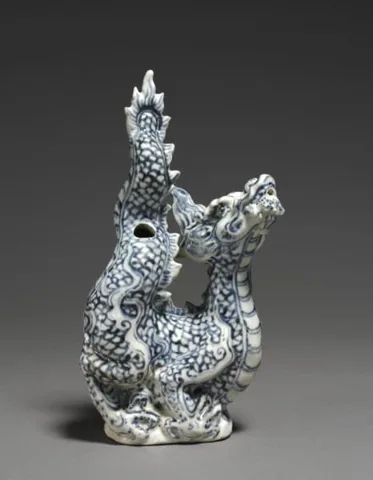
The Vietnamese dragon ewer also combines an animal body with a vessel for liquid. Their materials, dates and places of manufacture differ: the dragon is ceramic, while this lion is copper alloy. Comparing the ideas does not establish direct influence. Start by comparing the volume of each body and the placement of raised elements.
Explore the comparison → Ewer in the Shape of a Dragon
The observations and comparisons above are editorial interpretation. Object facts are based on these museum records. This object · Comparison object
An editorial summary based on the museum's official records.
I'd get distracted by that mane before washing my hands.
Which part of this lion would you like to examine?
Choose the answer that interests you most.
This voting experience is local to this device.
Choices are not shared or counted together with other people's votes.
Object Details
- Official title
- Aquamanile in the Form of a Lion
- Date
- ca. 1400
- Place
- Nuremberg, Germany
- Collection
- The Metropolitan Museum of Art
- Accession number
- 1994.244
- Source
- Official collection page
The Cloisters Collection, 1994
The museum's image-use policy
Object-image rights checked: 2026-10-11