A dragon ewer: fill at the tail, pour from the mouth
Ewer in the Shape of a Dragon / 1400s
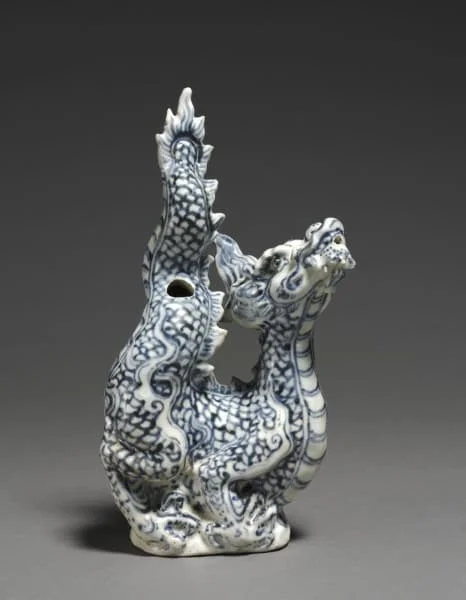
You fill it at the tail and pour from the mouth?
So, what is it?
An ewer with a filling opening in the tail and a pouring spout at the dragon's mouth.
A closer look
A white body with blue scales. With its neck and tail raised, this dragon is an ewer from 15th-century Vietnam. On the tail side is an opening for pouring liquid in.
According to the museum, liquid was poured in through the tail and out through the mouth. The vessel takes the shape of a dragon, with the two ends of its body serving as the inlet and outlet.
It is not just a dragon-shaped spout: the entire vessel is a dragon. Once you know where the liquid goes in and where it comes out, that raised tail begins to look a little different.
Find the inlet and outlet first
With the museum's account in mind, follow the photograph from tail to body, neck and mouth. Reading the animal's outline also helps explain the vessel's use: liquid entered at the tail and left through the mouth. The photograph is not a cross-section, however. It cannot establish the exact internal channel or how easily this particular ewer poured.
Two ways to transform a vessel
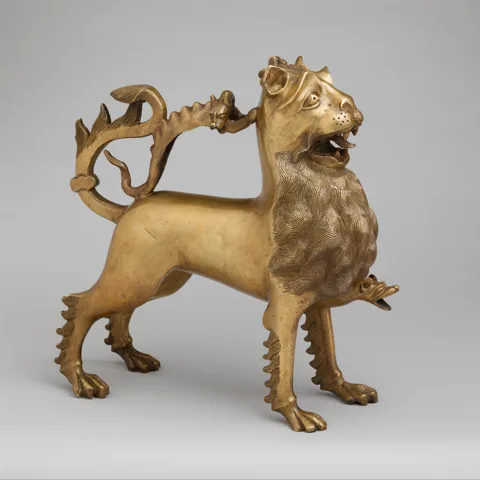
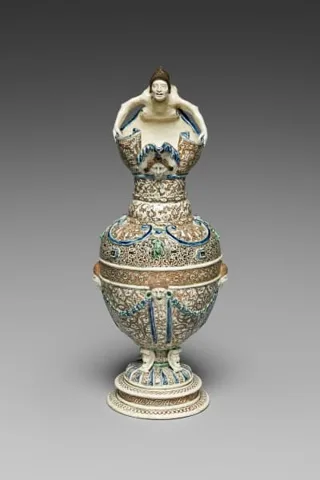
The French ewer with faces and frogs adds projecting ornament to a vessel with a neck and body. Here, the entire vessel reads as an animal. Comparing them separates decorating a useful object from transforming its overall silhouette. This is a comparison of forms, not evidence of a historical connection between the makers.
The observations and comparisons above are editorial interpretation. Object facts are based on these museum records. This object · Comparison object
An editorial summary based on the museum's official records.
So that's where it goes in. I overlooked the tail!
What would you look at first on the dragon ewer?
Choose the answer that interests you most.
This voting experience is local to this device.
Choices are not shared or counted together with other people's votes.
Object Details
- Official title
- Ewer in the Shape of a Dragon
- Date
- 1400s
- Place
- Vietnam (museum designation: Vietnam (Annam))
- Collection
- The Cleveland Museum of Art
- Accession number
- 1989.359
- Source
- Official collection page
Bequest of Mrs. Severance A. Millikin
The museum's image-use policy
Object-image rights checked: 2026-10-11
AI concept image — a fictional design
What if we made it again today?
This is an AI-assisted creative concept. It is not a real product, a museum object, or a faithful reconstruction. It was not planned, supervised or endorsed by the museum.
The original object in the museum
Ewer in the Shape of a Dragon / 1400s
AI concept image · a fictional design
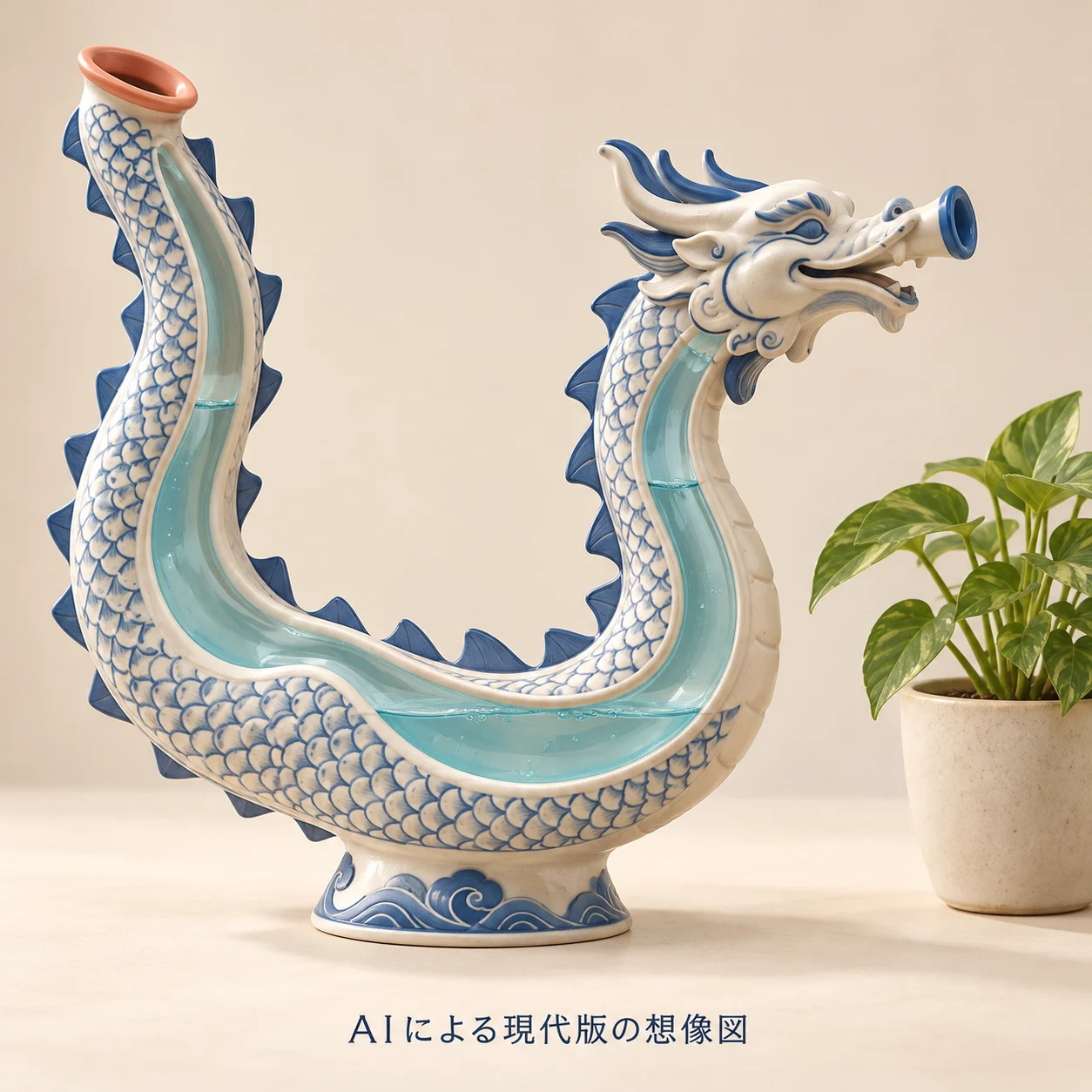
A dragon watering can with a visible waterway
We kept the raised tail and dragon's mouth and made the water's route transparent. We imagined a form that makes the dragon seem to lend a little help whenever you water your plants.
Ideas and limitations of this fictional design
Watch liquid travel from tail to mouth as you water your plants.
- Imagined feature: an educational-style watering can with a transparent water channel
- Imagined feature: color-coded openings at the tail for filling and the mouth for pouring
- Imagined feature: an independently designed, simplified outer form
This concept makes no claim to carry forward the object's cultural meaning or traditions. Suitability for drinking water and compliance with safety standards for children have not been verified.
Not fire—water! And you can see its whole route!?
For life today, what would you like to explore?
Choose the answer that interests you most.
This voting experience is local to this device.
Choices are not shared or counted together with other people's votes.