A puzzle jug with holes in its neck
Puzzle jug / 18th century
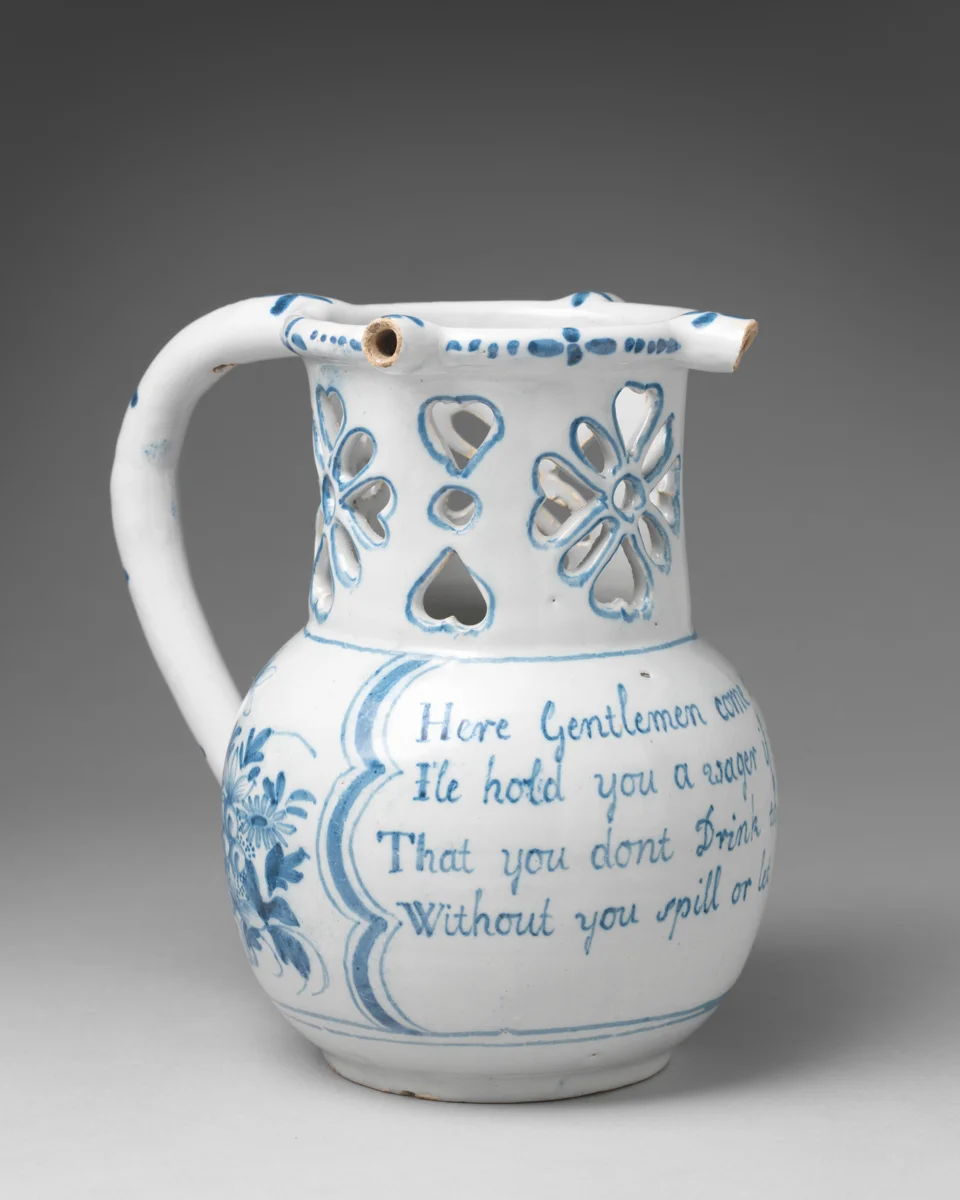
With heart-shaped holes in the neck, how did anyone use it?
So, what is it?
A vessel catalogued as a 'Puzzle jug'. How people drank from this particular example has not been verified.
A closer look
Blue flowers and lettering on a white ground. Look up at the neck of the jug and you will find pierced openings, including heart shapes. It looks like a container for liquid, yet it has holes near the top. That combination invites the question: how was it used?
Catalogued by The Metropolitan Museum of Art as a 'Puzzle jug', this is an 18th-century tin-glazed earthenware vessel from Liverpool, Britain. It is 17.8 centimeters tall. The official record confirms its date, place, material and dimensions, but the object page does not provide a detailed account of its use or mechanism.
The internal structure of this particular jug and the way it was drunk from have not been verified. We cannot simply apply the mechanisms of other puzzle jugs to this one. Nor do we reproduce or translate the full inscription, because it cannot be read in its entirety from the photograph. Here, we go only as far as observing the blue patterns and the shapes of the pierced openings.
Ask a question from the holes
The pierced openings sit around the neck, rather than at the base. Separate the unpierced body from the open upper part: holding liquid and pouring it by tilting become two different problems. What would happen if it were tipped like an ordinary jug? The photograph supports that question, but does not by itself reveal the correct way to drink from this particular example.
Compare a documented route for liquid
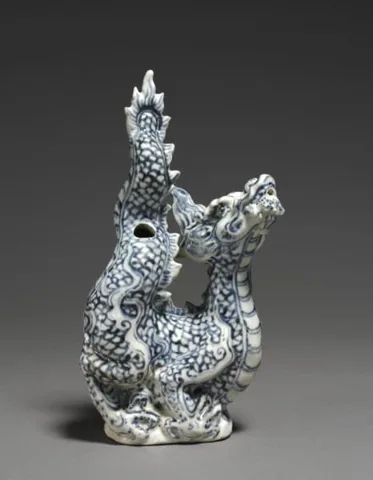
For the dragon ewer, the museum explains that liquid entered at the tail and left through the mouth. The official page for this puzzle jug does not describe its internal route or operation. Comparing them shows why an unusual shape calls for attention to what photographs and records actually establish. We leave the unverified mechanism open rather than supply an invented answer.
Explore the comparison → Ewer in the Shape of a Dragon
The observations and comparisons above are editorial interpretation. Object facts are based on these museum records. This object · Comparison object
An editorial summary based on the museum's official records.
Lovely little holes—but putting water in makes this a puzzle.
What would you look at first in the photograph?
Choose the answer that interests you most.
This voting experience is local to this device.
Choices are not shared or counted together with other people's votes.
Object Details
- Official title
- Puzzle jug
- Date
- 18th century
- Place
- Liverpool, Britain
- Collection
- The Metropolitan Museum of Art
- Accession number
- 30.70.3
- Source
- Official collection page
Gift of Frank Stoner, 1930
The museum's image-use policy
Object-image rights checked: 2026-10-11